America's Most Threatened Wild Places: Public Lands Under Pressure
From drilling threats in the Arctic to mining pressure in the desert Southwest, America's wild places face mounting threats. Here's what's at stake.
June 2, 2026
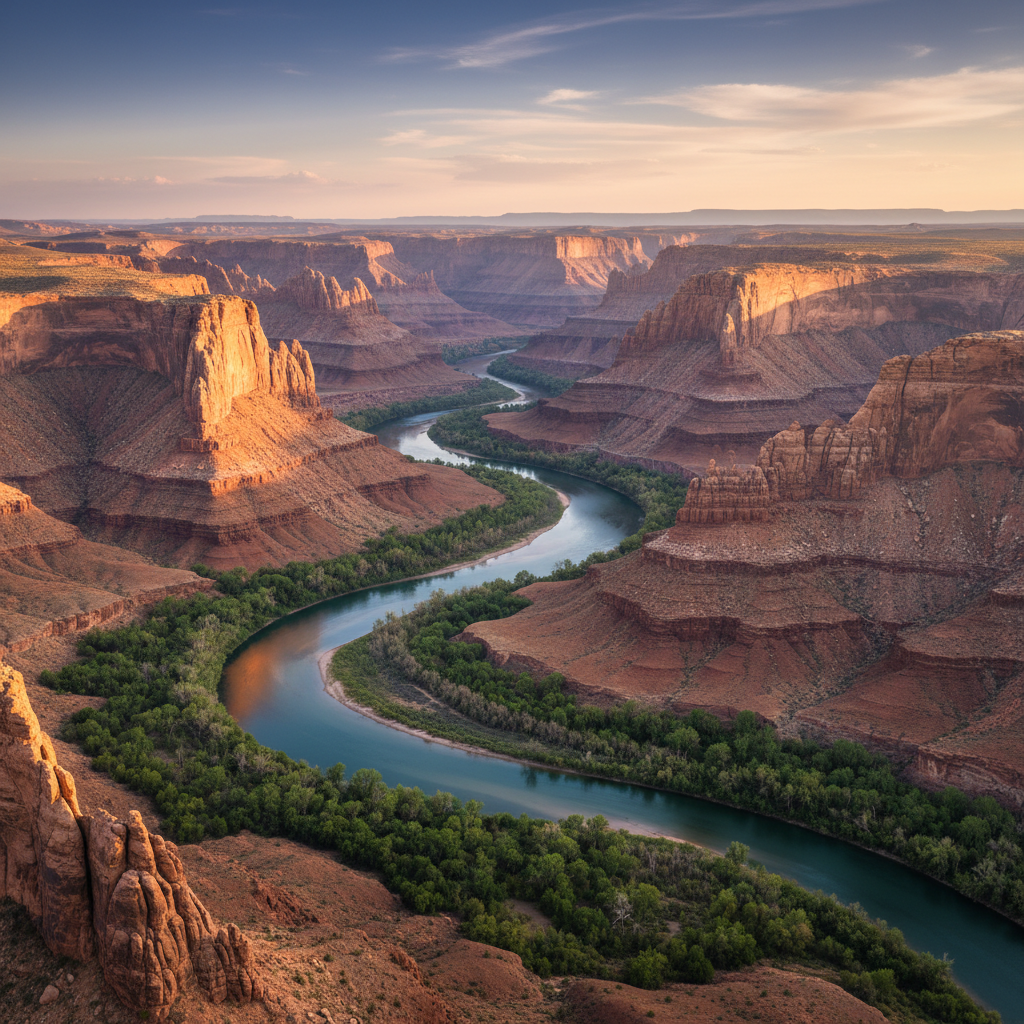
America's Most Threatened Wild Places: Public Lands Under Pressure
The United States is home to the most ambitious public lands system in human history. Over 640 million acres — roughly 28% of the total land area — is managed by the federal government on behalf of all Americans. This includes 63 national parks, 193 national forests, 580 wildlife refuges, 479 wilderness areas, and vast stretches of Bureau of Land Management territory.
These lands belong to you. They are your inheritance — and in every generation, some portion of that inheritance has been at risk.
This guide examines the American wild places facing the greatest pressures today, the specific threats they face, and why the outcome matters for everyone who has ever stood at a canyon rim or walked a quiet forest trail.
The Value of What We're Protecting
Before we talk about threats, let's talk about what's at stake.
America's public lands:
- Provide clean water to hundreds of millions of Americans (most major US watersheds originate on public lands)
- Store enormous amounts of carbon in forests, wetlands, and grasslands
- Protect biodiversity — over a third of all threatened and endangered species in the US depend on federally managed public lands
- Support outdoor recreation — a $788 billion sector of the American economy
- Preserve cultural and spiritual heritage for Indigenous peoples and all Americans
- Provide refuge from the noise, speed, and crowding of modern life
Most Threatened Wild Places in America
1. Arctic National Wildlife Refuge, Alaska
The Arctic National Wildlife Refuge (ANWR) is 19 million acres of pristine Arctic wilderness in northeastern Alaska — one of the last intact Arctic ecosystems on Earth. Its coastal plain is the calving ground for the 200,000-strong Porcupine caribou herd and vital habitat for polar bears, musk oxen, and hundreds of migratory bird species.
For decades, the coastal plain's potential oil reserves have made it the most contested piece of public land in American history. Congress authorized leasing in 2017; legal battles over its implementation continue. Any industrial development in this roadless, undisturbed wilderness would be permanent — there is no industrial "cleanup" that returns tundra to its original state.
2. Bears Ears National Monument, Utah
Bears Ears is sacred land to five Native American tribes: the Navajo Nation, Hopi, Zuni, and Ute tribes. Designated as a national monument in 2016, it protects over 100,000 documented archaeological sites, ancient cliff dwellings, and some of the most spectacular canyon country in the American West.
The monument was reduced by 85% in 2017, reopening vast areas to mining and energy development. Restoration lawsuits from tribes and conservation groups have been ongoing. Bears Ears represents a critical test of whether Indigenous land stewardship and cultural heritage will be respected in American public lands management.
3. Greater Yellowstone Ecosystem
Yellowstone itself is well-protected. But the Greater Yellowstone Ecosystem — the 22 million acres surrounding the park that are essential to its wildlife's survival — faces constant pressure.
Grizzly bears, wolves, bison, and elk all range far beyond Yellowstone's boundaries, into national forests and BLM land that have dramatically fewer protections. Proposed mines, energy developments, and livestock grazing conflicts within the ecosystem threaten the wildlife corridors that make Yellowstone's extraordinary fauna possible.
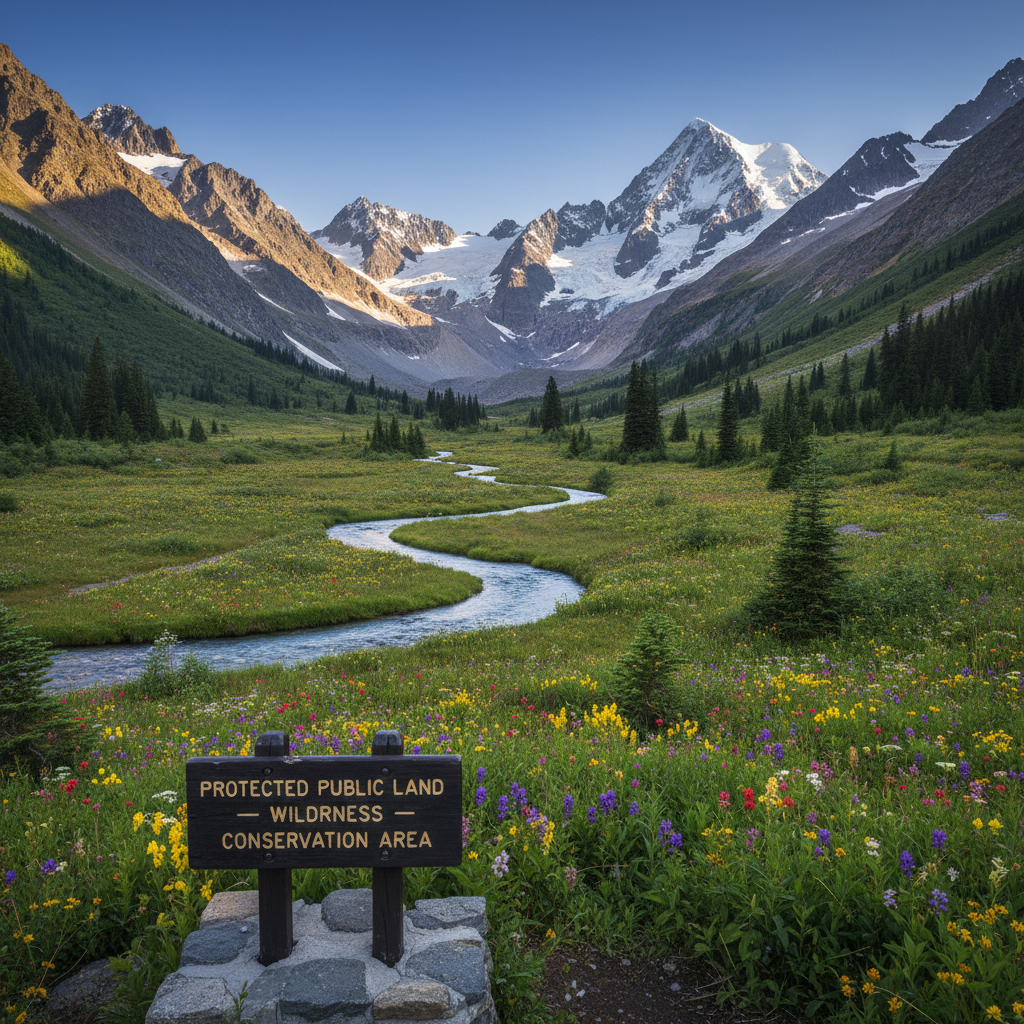
4. The Grand Staircase-Escalante Region, Utah
This remote Utah plateau is home to some of the most spectacular and scientifically valuable landscape in North America. Paleontologists regularly discover new dinosaur species here. Slot canyons, mesas, and buttes create a landscape unlike anywhere else on Earth.
Like Bears Ears, Grand Staircase-Escalante National Monument was significantly reduced in 2017, opening previously protected lands to coal mining and energy leasing. Conservation organizations and state governments continue to contest these changes in court.
5. National Forests of the Pacific Northwest
The Pacific Northwest's national forests — Okanogan-Wenatchee, Mt. Baker-Snoqualmie, Gifford Pinchot, Siuslaw, and others — contain some of the last significant old-growth forest on federal land. Ongoing logging proposals, often justified under "forest health" or "fuel reduction" rationales, continue to target the largest, oldest trees in these forests.
These are not just timber resources. They are carbon storehouses, biodiversity hotspots, and irreplaceable ecosystems that took 200–500 years to develop.
6. Utah's Canyon Country — Energy and Mining Pressure
The Colorado Plateau — the vast sandstone wilderness encompassing much of southern Utah, northwestern New Mexico, and northern Arizona — holds significant oil, gas, coal, and uranium deposits beneath landscapes of extraordinary beauty and ecological value.
The region contains dozens of wilderness-quality areas that lack formal protection, making them vulnerable to energy leasing and mining claims that can permanently damage soils, water sources, and scenery.
The Economics and Politics of Public Lands Threats
Why public lands are perpetually contested:
Federal public lands sit above significant mineral, oil, gas, and coal deposits. Extracting those resources creates short-term economic value — primarily for the extraction companies. The long-term costs — environmental damage, lost recreational value, degraded water quality — fall on the public.
Outdoor recreation on public lands generates $788 billion annually and supports 5 million jobs — far more than the extractive industries that threaten these places. But those economic benefits are diffuse (spread across millions of businesses and individuals) while extraction profits are concentrated in a small number of companies with significant lobbying resources.
The transfer-to-states movement:
A political movement to transfer federal public lands to individual states — or to sell them entirely — has grown in recent years. Proponents argue states can manage lands more effectively. Critics point out that most Western states lack the financial capacity to manage millions of acres, making eventual sale to private interests — and permanent loss of public access — likely.
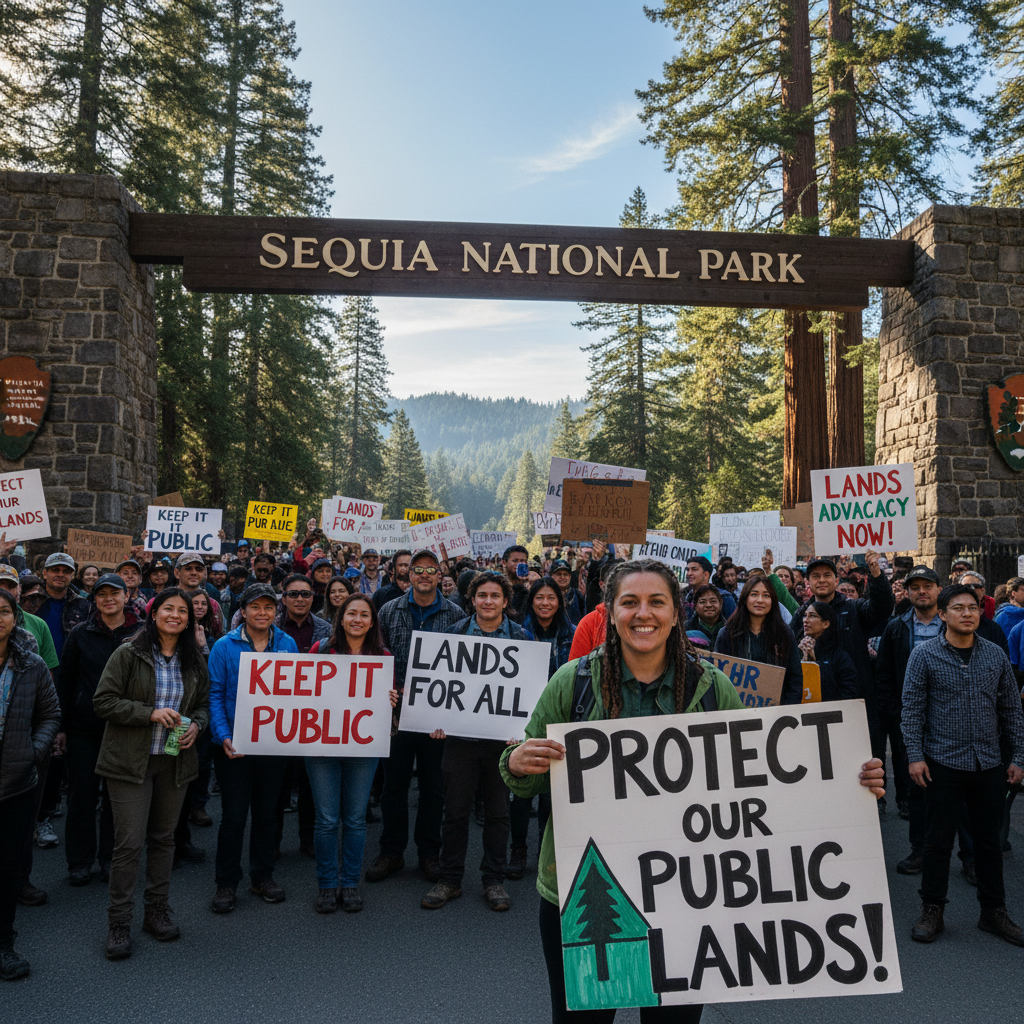
What You Can Do: Protecting Public Lands
1. Know what you own
Most Americans have no idea how much public land they own or where it is. Explore your public lands using the Recreation Information Database (recreation.gov), CalTopo, or the High Roads app.
2. Engage the public comment process
When federal agencies propose changes to public land management — new mining leases, changes to monument boundaries, logging projects — they are legally required to accept public comment. These comments matter and are part of the legal record.
3. Support conservation organizations
- The Wilderness Society: Advocacy for wilderness designation and public lands protection
- Earthjustice: Legal defense of public lands through litigation
- The National Parks Conservation Association: Watchdog and advocate for the national park system
- Defenders of Wildlife: Protection of wildlife on public lands
4. Vote with public lands in mind
Federal land management policy is set by Congress and implemented by administrations. Presidential and congressional elections directly determine the fate of wild places.
5. Visit and spend money in gateway communities
Communities near public lands depend economically on visitors. Tourism dollars create a constituency for protection.
Frequently Asked Questions
Q: Who owns America's public lands? A: All American citizens collectively. Federal public lands are managed by agencies (NPS, USFS, BLM, FWS) on behalf of the public.
Q: Can public land be permanently sold to private buyers? A: Yes, though this requires an act of Congress for most designations. Land disposals have occurred historically and remain a political possibility.
Q: What's the difference between a national park and a national forest? A: National parks are primarily preservation-focused — development and resource extraction are largely prohibited. National forests are managed for "multiple use" which includes timber harvesting, grazing, and energy development alongside recreation.
Q: What is a wilderness area? A: A formal legal designation created by the Wilderness Act of 1964. Wilderness areas prohibit roads, motorized vehicles, and mechanized use. They are the highest level of federal land protection short of a national park.
Conclusion
Public lands are not guaranteed. They exist because earlier generations fought to create them, defend them, and keep them open. Every generation faces its own battles.
The wild places of America — the canyons and forests, the arctic tundra and desert wilderness, the rivers and mountain valleys — are irreplaceable. Once degraded, they cannot be restored on any timescale that matters to the people alive today. Once lost, they are lost.
The question is not whether we can afford to protect them. It's whether we can afford not to.
Related: Why Old-Growth Forests Matter | Leave No Trace Complete Guide | North American Wildlife Watching Guide