Wilderness First Aid Essentials: What Every Hiker Must Know
Every hiker should know basic wilderness first aid. Learn to treat the most common backcountry injuries and emergencies before help is hours away.
June 2, 2026
Wilderness First Aid Essentials: What Every Hiker Must Know
You're six miles from the trailhead. Your hiking partner slips, rolls an ankle, and can't put weight on their foot. There's no cell signal. The nearest road is a three-hour hike away.
What do you do?
This is the fundamental difference between urban first aid and wilderness first aid: in the backcountry, help is not minutes away. It may be hours or even days. The decisions you make in those first minutes — and your ability to keep someone stable and moving — can mean the difference between a serious situation and a tragedy.
This guide covers the wilderness first aid knowledge every hiker should have, the gear to pack, and how to handle the most common backcountry medical emergencies.
The Wilderness First Aid Mindset
Wilderness first aid (WFA) operates on a different set of principles than urban first aid. In the city, your job as a first responder is simple: keep the victim stable until EMS arrives in minutes. In the wilderness, you are the medical system — sometimes for hours or days.
This changes everything:
- You may need to improvise with equipment that wasn't designed as medical gear
- You may need to evacuate an injured person — decisions that require assessment skills
- You may need to treat non-life-threatening injuries rather than just "calling 911 and waiting"
- You must prevent a bad situation from becoming worse through smart decisions under pressure
Your Wilderness First Aid Kit: What to Pack
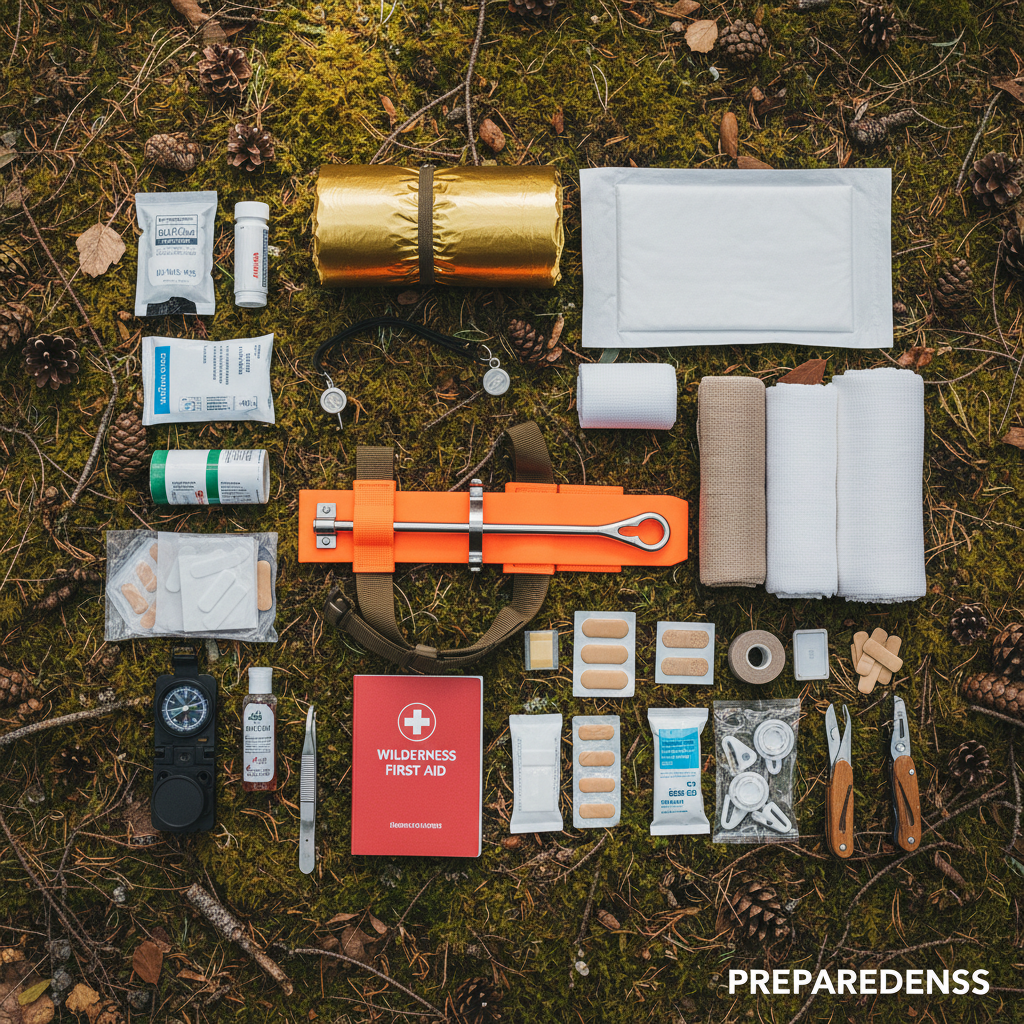
Before anything else, build (or buy) a proper wilderness first aid kit. Commercial kits are convenient, but know what's in yours and why.
Essential items:
Wound care:
- Sterile gauze pads (multiple sizes)
- Medical tape (cloth — more durable than paper)
- Closure strips / butterfly bandages
- Irrigation syringe (for cleaning wounds)
- Antiseptic wipes
- SAM splint (moldable aluminum splint for fractures and sprains)
- Elastic bandage (ACE wrap)
- Nitrile gloves (always wear before treating wounds)
Blister care:
- Moleskin and Leukotape
- Small scissors and a needle (sterilized with flame)
Medications:
- Ibuprofen and acetaminophen
- Diphenhydramine (Benadryl) for allergic reactions
- Personal prescription medications
- Antacids
- Oral rehydration salts
Emergency items:
- Emergency space blanket
- Whistle (for signaling rescue)
- Small flashlight or headlamp
- Satellite communicator (a Garmin InReach or SPOT device is the most important safety investment you can make)
- Emergency contact card with your itinerary
The Most Common Wilderness Medical Emergencies
1. Blisters
Blisters are the single most common backcountry injury and can turn a great hike into a painful ordeal — or worse, force an evacuation if left untreated.
Prevention: Wear properly fitted boots broken in before the trip. Use moisture-wicking wool socks. Apply Leukotape to known hot spots before hiking.
Treatment:
- Drain large, painful blisters with a sterilized needle
- Clean with antiseptic
- Apply moleskin with a donut-hole cut-out around the blister
- Cover with a bandage and Leukotape to keep it from reforming
2. Sprains and Strains
Ankle sprains are extremely common on uneven terrain. A mild sprain can be managed in the field; a severe sprain (or fracture) may require evacuation.
Field assessment: If the victim can walk and bear weight, it's likely a sprain. If they cannot bear weight, suspect a fracture.
Treatment — RICE protocol:
- Rest
- Ice (or cold water if ice isn't available)
- Compression (ACE wrap)
- Elevation
For continued hiking, tape the ankle firmly and use trekking poles for stability. In a significant sprain, make a SAM splint and consider evacuation.
3. Hypothermia
Hypothermia — dangerously low core body temperature — can develop even in mild weather when you combine wetness, wind, and fatigue. It kills hikers who weren't prepared for how fast conditions change.
Early signs: Shivering, slurred speech, stumbling, poor decision-making Severe signs: No shivering (a bad sign — the body has stopped trying to warm itself), unconsciousness, blue lips
Treatment:
- Get the victim out of wind and wet conditions immediately
- Remove wet clothing and replace with dry layers
- Insulate from the ground (the ground draws heat away faster than cold air)
- Use a sleeping bag and a space blanket
- Provide warm fluids if the victim is conscious
- Core-to-core warming: have another person share body heat in the sleeping bag
- Evacuate immediately for severe hypothermia
4. Heat Exhaustion and Heat Stroke
On the opposite end: heat illness. Underestimated by many hikers, heat stroke is life-threatening.
Heat exhaustion: Heavy sweating, weakness, cold/pale/clammy skin, fast/weak pulse, nausea Heat stroke (emergency): High body temperature (103°F+), hot/red skin, rapid/strong pulse, confusion, possible loss of consciousness
Treatment for heat exhaustion:
- Move to shade, cool environment
- Apply cool, wet cloths
- Sip cool water
- Lie down with legs elevated
Treatment for heat stroke:
- THIS IS A MEDICAL EMERGENCY — call for evacuation immediately
- Cool the victim by any means: submerge in water, pour water over skin, fan vigorously
- Do not give fluids if victim is confused or unconscious
5. Wound Care and Infection Prevention
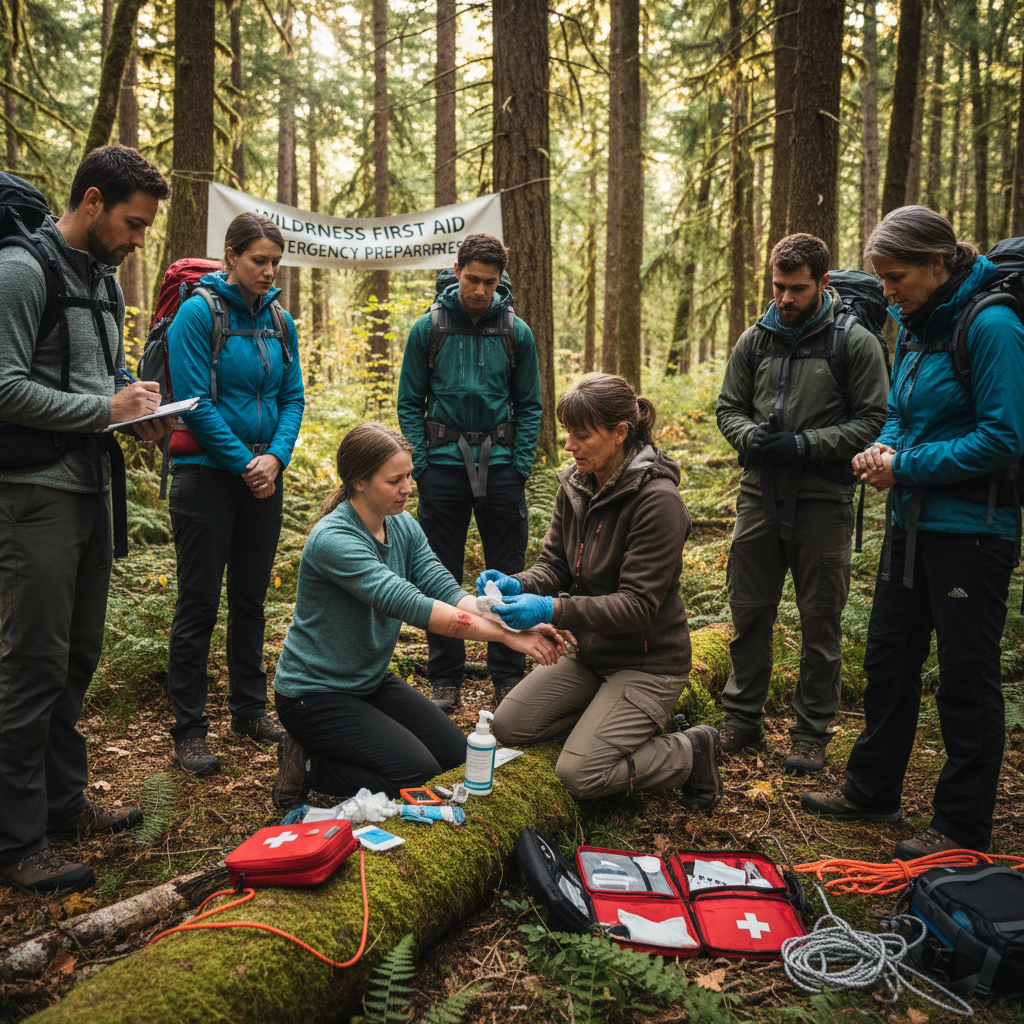
The wilderness is not sterile. Any wound has significant infection risk, especially punctures, animal bites, and wounds contaminated with soil.
Field wound care:
- Apply pressure to stop bleeding
- Irrigate thoroughly — use the syringe to flush with clean water. "The solution to pollution is dilution."
- Remove visible debris with tweezers
- Apply antiseptic
- Cover with sterile dressing
- Monitor for infection signs: increasing redness, warmth, swelling, pus, red streaks (requires immediate evacuation)
6. Anaphylaxis (Severe Allergic Reaction)
Bee stings, wasp stings, and unknown plant contact can trigger life-threatening anaphylaxis in sensitive individuals.
Signs: Hives, rapid swelling (especially face/throat), difficulty breathing, dizziness
Treatment:
- Use epinephrine auto-injector (EpiPen) if available and prescribed
- Administer Benadryl if available
- Evacuate immediately — symptoms can recur even after epinephrine
Known allergy sufferers should carry at least two EpiPens on any backcountry outing.
When and How to Evacuate
Evacuation decisions require judgment. Some guiding principles:
Evacuate immediately for:
- Chest pain or difficulty breathing
- Loss of consciousness
- Suspected spinal injury
- Fractures below the knee (can sometimes walk out) vs. above the knee (usually cannot)
- Signs of severe infection
- Anaphylaxis
- Heat stroke
- Severe hypothermia
Can manage and walk out:
- Mild sprains
- Minor lacerations once controlled
- Mild to moderate heat exhaustion with improvement
- Blisters
Using a satellite communicator: Devices like Garmin InReach allow two-way text communication from anywhere on Earth. They can trigger an SOS that alerts a 24-hour rescue coordination center. This is non-negotiable gear for solo travel and remote trips.
Getting Trained: Wilderness First Aid Courses
Reading about WFA is valuable — but taking a course is transformative. These providers offer excellent wilderness first aid training:
- NOLS Wilderness Medicine: The gold standard for serious backcountry travelers
- Wilderness Medical Associates (WMA)
- SOLO Wilderness Medicine
- REI Adventures: Introductory WFA courses in many locations
WFA certification typically requires 16–20 hours. Wilderness First Responder (WFR) — the standard for guides and rangers — is 70–80 hours.
Frequently Asked Questions
Q: Do I need a first aid certification to hike in the backcountry? A: No legal requirement, but we strongly recommend at minimum a Wilderness First Aid (WFA) course for any trip more than a day's walk from a trailhead.
Q: What's the most important item in a wilderness first aid kit? A: A satellite communicator. No piece of medical equipment compares to the ability to call for professional rescue.
Q: How do I know if a sprain is actually a fracture? A: In the field, you often can't know for certain. If the victim cannot bear weight, treat it as a fracture. Immobilize with a SAM splint and evacuate.
Q: How long can food safely stay in a cooler? A: Unrelated to first aid, but important for camp health: perishables stay safe for 2 days in a properly iced cooler (below 40°F).
Conclusion
The skills in this guide could save a life — yours or someone you care about. Wilderness first aid is not about being paranoid; it's about being prepared to handle what the backcountry might send your way. Pair your knowledge with a well-stocked kit, a satellite communicator, and a formal training course, and you'll be genuinely ready for the wild.
Related reading: Leave No Trace Guide | Essential Camping Gear for Beginners | Best Hiking Backpacks Under $100