Essential Camping Gear for Beginners
Everything you need to pack for your first camping trip, without overspending.
May 16, 2026
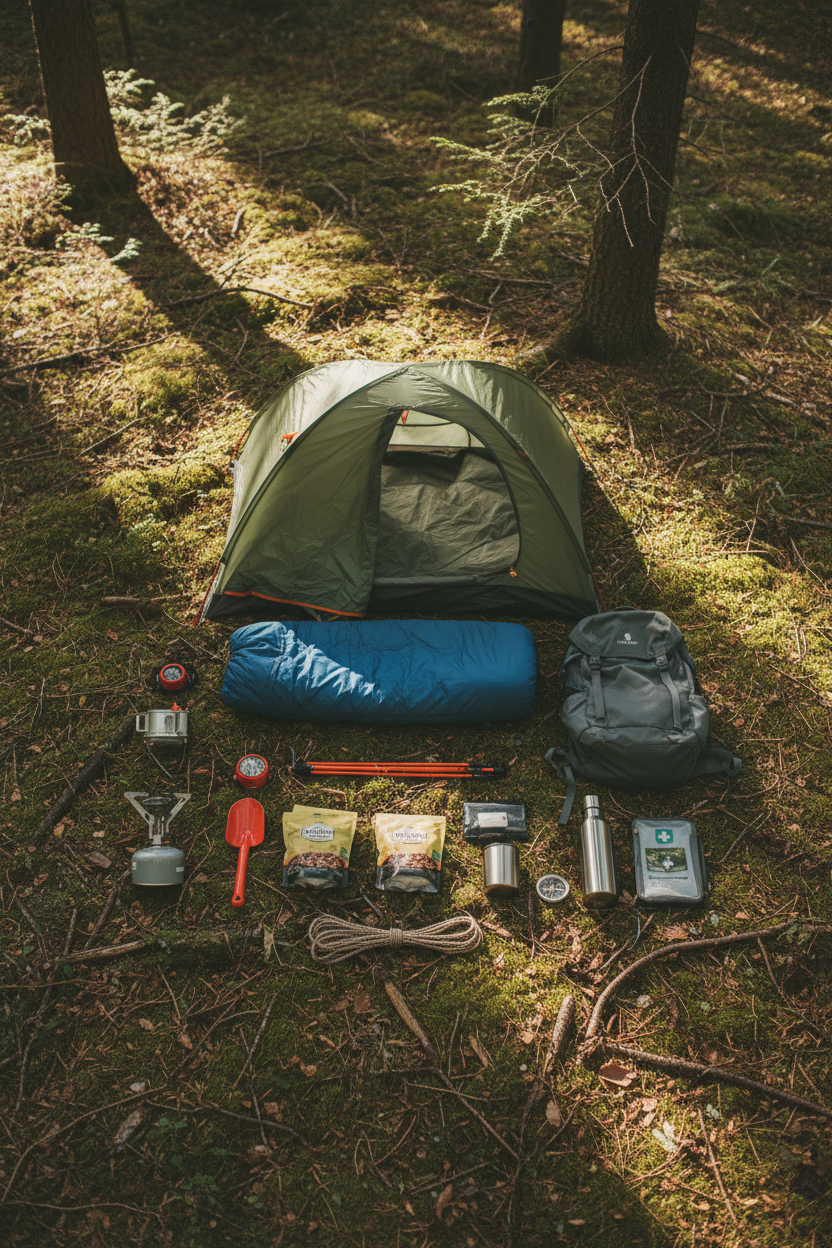
Essential Camping Gear for Beginners: The Complete Checklist
Your first camping trip is one of those experiences that can genuinely change how you see the world — waking up to birdsong, watching stars from your sleeping bag, sitting around a fire with people you love. But getting there requires some preparation, and the gear question looms large for beginners.
The good news: you don't need to spend a fortune to camp comfortably. You don't need the same ultralight titanium setup as a seasoned thru-hiker. You need functional gear that keeps you safe, dry, and rested. This guide tells you exactly what that is.
The Core Four: Non-Negotiable Items
Every camping setup — regardless of budget or experience level — needs to nail four fundamentals:
- Shelter (you need to stay dry)
- Sleep system (you need to stay warm)
- Food and water (you need to eat and stay hydrated)
- Safety basics (you need to handle what goes wrong)
Everything else is nice to have. These four are non-negotiable.
Shelter: Choosing Your First Tent
Your tent is your home in the wilderness. Buy a bad tent and you'll be wet, cold, and awake all night in a rainstorm.
What to look for:
Freestanding vs. non-freestanding: Freestanding tents stand on their own with poles and don't require stakes to remain upright. Non-freestanding designs are lighter but require staking. For beginners, freestanding is far easier to set up.
Rainfly coverage: The rainfly is the outer waterproof layer. Look for a "full coverage" rainfly that extends to the ground on all sides — not a partial fly that leaves the mesh tent body exposed. This is critical for weather protection.
Seasons: A 3-season tent is appropriate for spring, summer, and fall camping. 4-season tents are for winter mountaineering. Beginners need a 3-season.
Size: Always buy one size larger than your group. A "2-person tent" holds two people with no space for gear. A "3-person tent" for 2 people gives you room to be comfortable.
Beginner tent recommendations:
- REI Co-op Passage 2: $159, excellent value, bombproof in rain
- Big Agnes Copper Spur HV UL2: $450, excellent ultralight option if budget allows
- Coleman Sundome 4: $80–100, basic but functional for campground car camping
The Sleep System: Sleeping Bag + Sleeping Pad
Your sleep system is more important than your tent. Experienced campers know that a cheap tent with a great sleeping bag beats an expensive tent with a cheap sleeping system every time.
Sleeping bags: temperature ratings
Sleeping bags are rated to the lowest temperature at which a "standard" person will be comfortable. The problem: this standard assumes a well-nourished, non-fatigued adult male. Real-world comfort requires buying a bag rated 15–20°F below the coldest expected nighttime temperature.
Insulation types:
- Down: Warmer for weight, compresses smaller, lasts decades if cared for, loses insulation when wet, costs more
- Synthetic: Cheaper, insulates when wet, heavier and bulkier, degrades faster
For car camping where weight doesn't matter: synthetic is fine. For backpacking: invest in down.
Sleeping pads: the most overlooked item
Novice campers consistently underestimate sleeping pads. They assume a sleeping pad is just for cushioning. In reality, it's critical insulation — your sleeping bag's insulation is compressed under your body weight and provides almost no warmth. The pad is what keeps you from the cold ground.
R-value is the insulation rating for sleeping pads. R-value 2–3 is adequate for summer camping above 40°F. R-value 4–5 works down to 20°F.
Types:
- Closed-cell foam: Cheap ($20–50), indestructible, light, but thick and bulky
- Inflatable: Compact, comfortable, expensive ($80–$200), can puncture
- Self-inflating: Middle ground on all dimensions
For beginners: a Therm-a-Rest Z Lite Sol (closed cell, $50) is an excellent, durable starting point.
The Camp Kitchen: Cooking in the Outdoors
Food tastes better outdoors — that's a scientific fact (not really, but it feels true). Setting up a functional camp kitchen doesn't require much equipment.
Camp stove options:
Canister stove (beginners): A small burner that screws onto a fuel canister. Fast, clean, easy to use. MSR PocketRocket ($45) and Jetboil Flash ($100) are the standards.
Two-burner propane stove: Better for families and car camping. Coleman Classic Propane is the industry standard at $50–60.
No stove/fire-only cooking: Possible for car camping where fires are allowed. Requires more skill and planning. Not recommended for beginners.
The minimal kitchen kit:
- 1.5L pot with lid
- Small frying pan (or lid that doubles as pan)
- Spork or utensil set per person
- Mug (insulated for double duty as bowl)
- Cutting board (small, flexible)
- Knife (a good chef's knife, not a pocket knife)
- Biodegradable soap and scrubber
Food planning:
For car camping, you can bring almost any food. For backpacking, calorie-dense, lightweight options are key. Start with car camping where you can bring a full cooler.
Safety Essentials
First aid kit
Buy a pre-assembled wilderness first aid kit (Adventure Medical Kits is the standard brand) and know what's in it. At minimum: blister care, bandages, antiseptic wipes, pain reliever, antihistamine, and an emergency space blanket.
Navigation
For any hike beyond the campground, bring a downloaded offline map (Gaia GPS or AllTrails) and know your route. Paper maps as backup in the backcountry.
Fire safety
Know local regulations before building any fire. Never leave a fire unattended. Drown it completely — pour water until ash is cold, stir, and drown again.
Bear safety
In bear country (most wilderness areas west of the Mississippi, and parts of the East), all food, trash, and scented items must be stored in a bear box or your locked vehicle overnight. Never leave food in a tent.
What to Leave at Home
New campers typically overpack. Some items that seem essential but aren't:
- Air mattress without insulation — cold and awkward in the outdoors
- Heavy cast iron cookware — for car camping it's fine, but overkill
- Lanterns with fragile glass globes
- Cotton base layers — cotton kills in cold wet conditions
- More clothes than you need — you're camping, not attending a conference
Budget Breakdown: First Camping Trip Costs
| Item | Budget Option | Mid-Range | |------|--------------|----------| | Tent (2p) | $80 (Coleman) | $160 (REI Passage) | | Sleeping bag | $60 | $150 | | Sleeping pad | $25 (foam) | $80 (inflatable) | | Camp stove | $45 | $100 | | Headlamp | $20 | $45 | | First aid kit | $25 | $45 | | Total | ~$255 | ~$580 |
Gear rentals (available through REI, many outfitters, and local clubs) can cut this cost dramatically for a first trip.
Frequently Asked Questions
Q: Can I rent camping gear instead of buying? A: Yes, and it's a great option for a first trip. REI rents tents, sleeping bags, and sleeping pads. Many outdoor outfitters and universities offer gear lending programs.
Q: Do I need a backpacking stove for campground camping? A: No. Car camping campgrounds often have fire rings and picnic tables. A two-burner propane stove is more practical for campground cooking.
Q: What's the single most important item I shouldn't skimp on? A: A quality sleeping bag and sleeping pad. Being cold at night ruins every camping trip, regardless of how nice your tent is or how good the food is.
Q: How do I know if my sleeping bag is warm enough? A: Check the temperature rating and subtract 15–20°F. If it's rated to 32°F, plan to sleep comfortably to about 45–50°F. Check nighttime lows for your destination before the trip.
Conclusion
You don't need to spend thousands of dollars to have a great first camping trip. You need to invest in the Core Four — shelter, sleep, food, safety — and leave the rest to be added over time as you figure out what you actually use and need.
The best camping gear is the gear you take with you. Start with what you can afford, get outside, and let the trail teach you what to buy next.
Related reading: How to Plan Your First Family Camping Trip | Leave No Trace Complete Guide | Best Solar Chargers for Camping