Understanding Wildlife Migration: The Epic Journeys Animals Make Every Year
From monarch butterflies to gray whales, North America's wildlife migrations are among nature's greatest spectacles. Here's when and where to witness them.
June 2, 2026
Understanding Wildlife Migration: The Epic Journeys Animals Make Every Year
Every autumn, something extraordinary happens across North America. Billions of birds — warblers, shorebirds, hawks, waterfowl — take to the night sky, navigating by stars and Earth's magnetic field toward wintering grounds thousands of miles away. Monarch butterflies, weighing less than a paper clip, fly up to 3,000 miles from Canada to a single forest in Mexico. Gray whales undertake a 12,000-mile round trip — the longest mammal migration on Earth.
Migration is one of the most breathtaking phenomena in the natural world. Understanding it — and knowing where to witness it — transforms the outdoors experience from passive recreation into something genuinely profound.
Why Animals Migrate
Migration exists because resources are unevenly distributed across time and space. The Arctic tundra, nearly impassable in winter, becomes an explosion of food and nesting habitat in summer — but only for a few months. Animals that evolved to exploit both environments — spending summer where resources peak, winter where survival is possible — outcompete those that stay in one place year-round.
The costs are enormous: energy expenditure, predation risk, navigational errors. The benefits must outweigh them. For millions of species, they do.
The Monarch Butterfly Migration
Perhaps no migration story captivates the public imagination like the monarch butterfly. Each fall, monarchs from east of the Rocky Mountains converge on the oyamel fir forests of central Mexico — specifically the Monarch Butterfly Biosphere Reserve in Michoacán — in numbers reaching hundreds of millions.
The mystery: No individual butterfly makes the round trip. The monarchs overwintering in Mexico have never been there before. They navigate to a forest their great-great-grandparents left, guided by a sun compass calibrated by circadian rhythms and possibly Earth's magnetic field.
The crisis: Monarch populations have declined by approximately 80% over the past three decades. Causes include milkweed loss (their sole larval food plant) due to agricultural herbicide use, deforestation of Mexican wintering sites, and climate change disrupting migration timing.
Where to witness it:
- Monarch Butterfly Biosphere Reserve, Mexico (November–March): The overwintering site, where trees are literally carpeted with butterflies
- Pacific Grove, California (October–February): The western migration route's overwintering site
- Cape May, NJ and Point Pelee, ON (September–October): Major stopover sites during fall migration
Bird Migration: The Invisible River Overhead
On clear fall nights, hundreds of millions of birds cross North America invisibly overhead. On a single peak migration night, radar has detected over a billion birds in flight across the continent.
Understanding the major flyways:
Bird migration in North America occurs along four major flyways:
- Atlantic Flyway: Eastern seaboard
- Mississippi Flyway: Following the river valley, the most heavily used
- Central Flyway: Great Plains
- Pacific Flyway: Western coast and mountain corridors
Top birding migration hotspots:
Cape May Point, New Jersey is arguably the most famous migration hotspot in North America. Jutting into Delaware Bay, it funnels billions of songbirds, raptors, and shorebirds into a bottleneck every spring and fall. The Cape May Bird Observatory runs daily counts from September through November.
Point Pelee National Park, Ontario is the southernmost point of mainland Canada, creating a similar funnel effect. The warbler migration in May rivals any wildlife spectacle on the continent.
Hawk Mountain Sanctuary, Pennsylvania hosts the world's first refuge for birds of prey. From mid-August through December, over 18,000 raptors are counted annually from the North Lookout.
Platte River, Nebraska is famous for the sandhill crane migration — over 500,000 cranes stage along a 75-mile stretch of the river each spring, one of North America's great wildlife gatherings.
Caribou: The Great Land Migration
The Porcupine caribou herd — named for the Porcupine River in northern Yukon — undertakes the longest land migration of any mammal in the world. Each spring, approximately 200,000 animals travel up to 1,500 miles from their winter range in the Yukon's boreal forests to their calving grounds on the coastal plain of the Arctic National Wildlife Refuge in Alaska.
This migration has occurred for thousands of years. Indigenous Gwich'in people have depended on this herd for their cultural and physical survival for millennia — which is why proposed oil drilling on the coastal plain represents not just an ecological threat but a human rights issue.
Other significant caribou migrations occur across Alaska, Canada's Northwest Territories, and the Ungava Peninsula in Quebec, where the George River herd once numbered nearly a million animals.
Gray Whale Migration: The Longest Mammal Journey
Gray whales breed in the warm lagoons of Baja California, Mexico, then migrate north along the Pacific coast to summer feeding grounds in the Bering and Chukchi Seas off Alaska — a round trip of up to 12,000 miles. It is the longest annual migration of any mammal.
Where to see gray whales:
- Point Reyes National Seashore, California (December–January): Southbound migration, often visible from shore
- Depoe Bay, Oregon (March–April): Northbound migration passes close to the Oregon coast
- San Ignacio Lagoon, Baja California, Mexico (January–March): The remarkable experience of friendly gray whales approaching whale-watching boats
Elk Rut Migration: Rocky Mountains
While not a migration in the traditional sense, elk movements in the Rocky Mountain West represent one of the most dramatic seasonal wildlife spectacles available to ground-level observers.
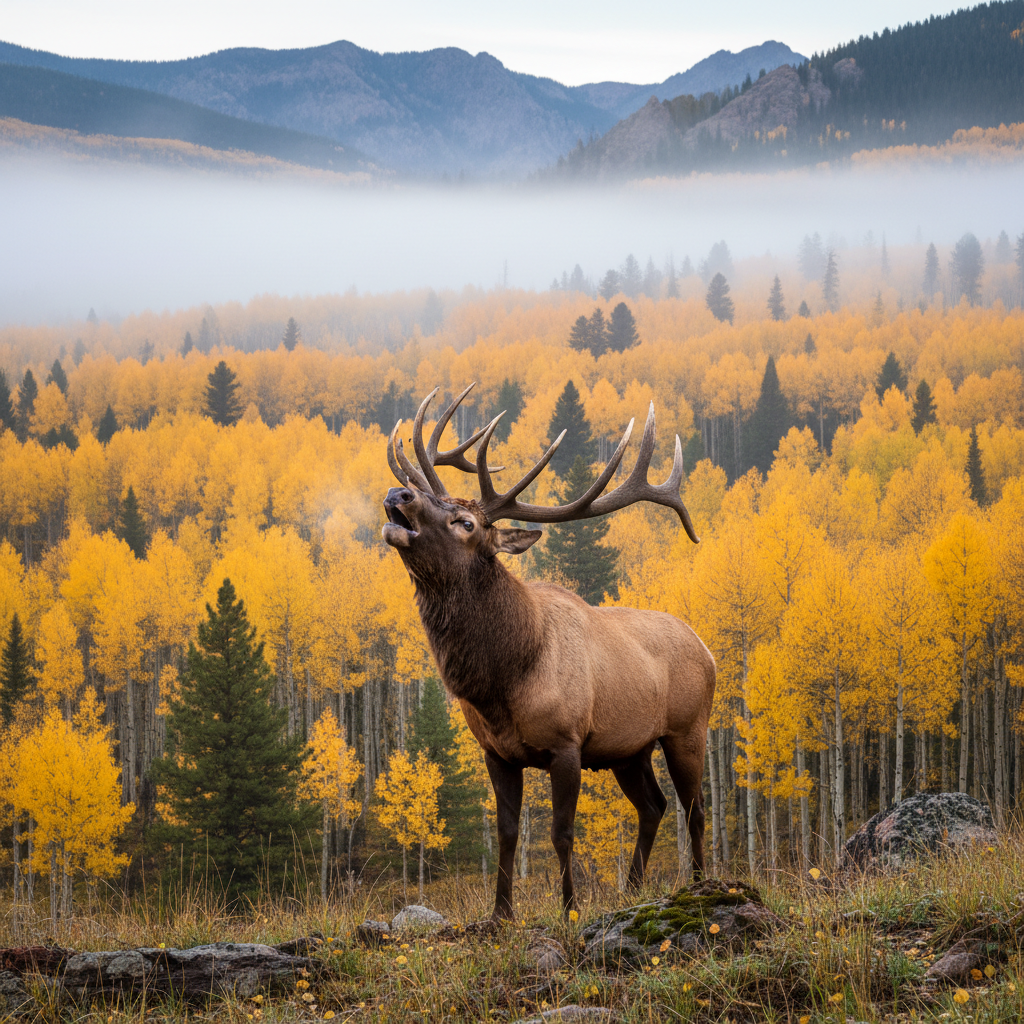
Every September and October, bull elk gather harems of cows in open meadows, bugling, sparring, and competing in displays of raw power and pageantry. The most accessible viewing is at Rocky Mountain National Park, where elk congregate in Horseshoe Park and Moraine Park — accessible from the main road.
And then in late fall, as snow closes high mountain passes, elk herds move to lower elevation winter range — a true migration that follows the same corridors their ancestors have used for thousands of years. The National Elk Refuge outside Jackson, Wyoming, hosts over 7,000 wintering elk each year.
How Climate Change Is Altering Migration
Migration evolved over millions of years in response to predictable seasonal patterns. Climate change is disrupting those patterns — and wildlife is struggling to adapt.
- Timing mismatches: Birds arriving at northern breeding grounds now find that insect peaks — which have shifted earlier — have already passed. Chicks hatch when food is already declining.
- Range shifts: Many species are moving their breeding ranges northward, creating new species assemblages and competitive dynamics.
- Habitat degradation at stopovers: Stopover sites — critical refueling points for migratory birds — are being degraded by development and agricultural change faster than birds can adapt.
- Phenological mismatch: Monarch butterflies may arrive at spring wildflower blooms before milkweed has emerged, or miss the milkweed window entirely due to drought.
Frequently Asked Questions
Q: When is the best time to see bird migration? A: Spring migration (April–May) brings birds in breeding plumage and is excellent for species diversity. Fall migration (August–October) brings larger numbers. Dawn and dusk on days following cold fronts produce the best "fallouts."
Q: Do I need expensive equipment to enjoy wildlife migration? A: Binoculars (8x42 is ideal) are sufficient for most migration watching. A field guide for your region completes the basic kit.
Q: How are monarch populations monitored? A: Annual counts at overwintering sites in Mexico and California, plus summer breeding surveys conducted partly by citizen scientists (Journey North program) track population trends.
Q: Can I volunteer to help with wildlife migration monitoring? A: Yes — see our Citizen Scientist Conservation Guide for programs that need volunteer observers.
Conclusion
Wildlife migration is a reminder that we share this planet with creatures whose lives are lived on a scale we can barely comprehend — crossing hemispheres guided by starlight and magnetic fields, returning to places they've never been before, carrying genetic memory in their small, determined bodies.
Witnessing migration — even once, even a small part of it — changes how you see the world.
Related reading: North American Wildlife Watching Guide | Best National Parks for Families | Citizen Scientist Conservation Guide